

Quick Summary
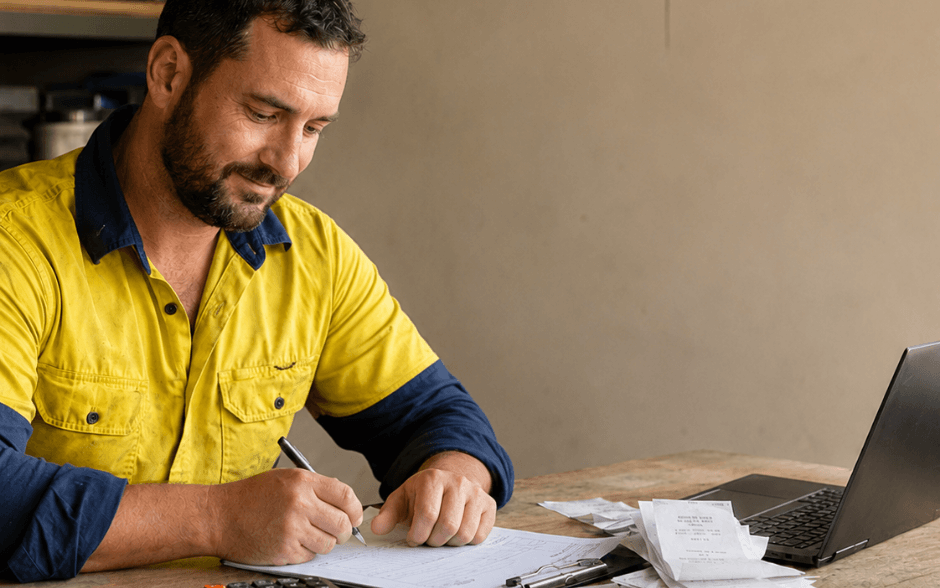
Running a trade business is busy enough without trying to sort receipts, GST, invoices, and bank reconciliations at the end of a long day. This guide gives Tradies a simple, practical overview of the bookkeeping basics that help keep business clearer and easier to manage, from keeping records and claiming expenses to staying ahead of GST and knowing when to ask for help.
When you are running a trade business, the day can fill up quickly.
There are jobs to price, materials to collect, staff or subcontractors to organise, customers to reply to, invoices to send, and usually a ute full of paperwork that you meant to sort out later.
For many Tradies, the bookkeeping side of business gets pushed to the end of the day, the end of the week, the weekend, or sometimes the end of the GST period.
And honestly, that is very common.
The good news is that bookkeeping does not need to feel complicated. With a few steady habits, your records can become much easier to manage, your GST can feel less stressful, and your business numbers can start to make more sense.
This guide is here to help you understand the bookkeeping basics that matter most for Tradies.
Why bookkeeping matters for Tradies
Bookkeeping is simply the way your business keeps track of money coming in and money going out.
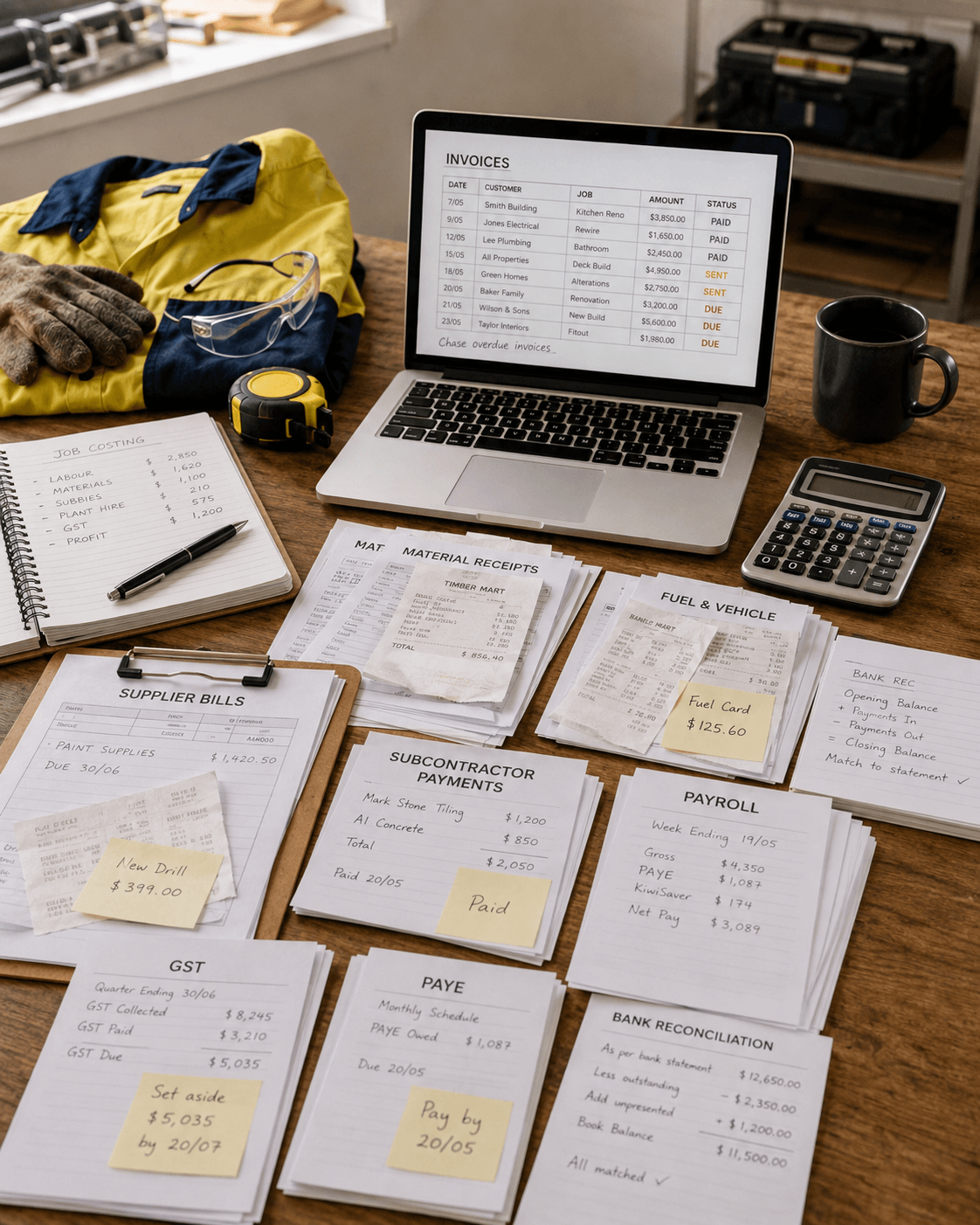
For a trade business, this usually includes:
Receipts and paperwork e.g. contracts
Customer invoices
Supplier bills / Material costs
Fuel and vehicle costs
Tool and equipment purchases
Subcontractor payments
Payroll, if you have staff
GST and PAYE
Bank reconciliations
When these things are kept up to date, and filed in your accounting software, it becomes much easier to see what is happening in your business.
You can see which jobs have been paid, which invoices are still sitting there, what your expenses are doing, and whether GST money needs to be set aside before the due date arrives.
Good bookkeeping gives you clearer numbers, calmer decisions, and fewer surprises.
1. Keep your receipts and records
This is one of the biggest bookkeeping habits for tradies.
Tradies and businesses need to keep accurate records so income, expenses, GST, employer obligations and loan/hp accounts can be worked out clearly. Business records also need to be kept for at least 7 years.
That means you want to keep things like:
Receipts
Supplier invoices
Customer invoices
Bank statements
Loan or finance documents
Vehicle records
Wage and payroll records
GST records
Quotes and job details
Subcontractor invoices
A simple way to make this easier is to photograph and upload receipts as soon as possible. You can easily take a photo of a receipt and upload it directly into Xero/MYOB using your mobile device. Even if you still have a paper receipt, a clear digital copy can save a lot of stress later. Receipts fade, get lost, end up in gloveboxes, or disappear into the bottom of a toolbox.
A good system means you are not trying to remember six months later whether that Bunnings receipt was for a client job, your own house, or something completely different.

2. Separate business and personal spending
This one can make a big difference.
When business and personal spending are mixed together, bookkeeping becomes much harder than it needs to be. It takes more time to work out what belongs to the business, what was private, and what can actually be claimed.
Business.govt.nz lists mixing business and personal receipts as a common mistake when claiming expenses. Where possible, pay business expenses from a business bank account or business card.
This gives you a cleaner trail and makes it easier to reconcile your accounts in Xero, MYOB, Fergus, Farm Focus, or whichever system you are using. It also makes life much easier when it is time to prepare GST returns or send information to your bookkeeper or accountant.
3. Know what expenses you may be able to claim
A common question Tradies ask is: “What can I claim?”
Business expenses are generally costs that relate to running your business. Expenses can reduce taxable income, and you need records to support what you claim.
For tradies, common business expenses may include:
Tools and equipment
Materials and supplies
Work vehicle costs
Fuel and parking for business trips
Phone and internet business use
Office/Administration expenses
Accounting or bookkeeping fees
Software subscriptions
Insurance
Advertising and website costs
Uniforms or protective workwear
Subcontractor costs
Staff wages
Training related to your trade or business
Some expenses are straightforward. Others need a bit more care, especially if they are partly personal and partly business. For example, your mobile phone, home office, internet, or vehicle may need to be split between business and private use.
This is where it helps to have someone check the details with you so you are claiming properly and keeping the right records.

4. Keep an eye on GST
GST is one of the big ones for tradies.
Once your turnover reaches $60,000 or more a year, you need to register for GST, charge 15% GST on sales and income, file GST returns, and pay GST.
A helpful habit is to treat GST as money you are holding, rather than money available to spend.
One simple way to do this is to set aside GST on your sales regularly into a separate account, so the money is there when it is time to file and pay.
This can help avoid that tight feeling when the GST due date comes around and the money has already been used for wages, materials, fuel, or the next job.
If GST always feels like a surprise, it may be a sign that your bookkeeping system needs a little more structure.
5. Understand vehicle expenses
For many tradies, the work vehicle is one of the biggest and most important business tools.
If a vehicle is used only for business, you can usually claim the full running costs as a business expense. If the vehicle is used for both business and personal trips, you need to work out the business portion correctly. Travel from home to work is treated as personal travel.
Depending on your situation, vehicle expenses may involve:
A logbook
Claiming 25% of running costs
Actual costs
Kilometre rates
Fuel
Repairs and maintenance
Insurance
WOF and registration
Parking
Depreciation
If no logbook is kept, the claim may be limited to 25% of vehicle running costs, and you may still need to support the percentage claimed.
For tradies, this is worth getting right because vehicle costs can be significant.

6. Send invoices promptly
Cash flow often becomes tight when invoices are delayed.
You finish the job, move to the next one, and suddenly the paperwork is sitting there waiting. The sooner invoices go out, the sooner payment can come in.
A good invoicing habit might look like:
Quote clearly before the job starts
Invoice as soon as the job or milestone is complete
Include payment terms / reduce payment terms
Ask for a deposit
Follow up unpaid invoices regularly - set the rules early
Keep notes on customer payments
Reconcile payments once they arrive
This is especially important if you are buying materials upfront or paying staff and subcontractors before the customer has paid you.
Good bookkeeping helps you see what is owed, what is overdue, and what cash is actually available.
7. Reconcile your bank accounts regularly
Bank reconciliation is one of those tasks that can feel small, but it keeps the whole system tidy. It means matching the transactions in your bank account with the records in your accounting software.
When reconciliations are done regularly, you can catch things like:
Missing receipts
Duplicate transactions
Unpaid invoices
Incorrect GST coding
Personal spending in the business account
Payments sitting in the wrong place
If bank recs are left too long, the pile can grow quickly. A monthly check-in can make the work feel much lighter. For busy trade businesses with lots of transactions, weekly can be even better.
8. Keep payroll and PAYE tidy if you have staff
If you have employees, payroll needs steady attention.
This includes:
Wages
PAYE
KiwiSaver
Leave
Public holidays
Timesheets
Employment records
Payroll filing
Payroll mistakes can create stress for both the business owner and the team. If you are unsure about pay rates, leave, public holidays, or PAYE filing, it is worth asking for support before it turns into a bigger issue. A calm payroll system helps everyone feel more confident.
9. Use the right software for the way your trade business works
The right system can save a lot of time. Many tradies use tools like Xero, MYOB, Fergus, Farm Focus, CashManager, or other accounting and job management systems.
For a trade business, software may help with:
Quotes
Invoices
Job tracking
Materials
Purchase orders
Timesheets
Customer records
Supplier bills
GST coding
Bank feeds
Reporting
The software only works well when it is set up properly. If your system feels confusing, clunky, or hard to keep up with, you may just need a bit of setup, training, or tidy-up support. Sometimes a few small changes can make the whole process feel easier.
10. Watch for the quiet warning signs
Most bookkeeping issues start small.
You might notice:
Receipts sitting in the ute
Invoices going out late
GST feeling stressful every period
Bank recs falling behind
Personal and business spending getting mixed
Payroll questions taking too much time
You are unsure what can be claimed
You avoid opening your accounting software
You feel busy, but unsure where the money is going
These signs usually mean the business has grown, the workload has changed, or the old system is no longer keeping up. That is a very normal stage for many business owners.

A simple monthly bookkeeping checklist for Tradies
Here is a simple place to start:
Upload or photograph receipts to your accounting software
Check unpaid customer invoices
Follow up overdue payments
Enter supplier bills
Reconcile bank accounts and credit cards
Check GST coding
Review upcoming GST or PAYE dates
Set aside GST and tax money
Check payroll records if you have staff
Review vehicle records or logbook
Look at cash flow for the next few weeks
You do not have to do everything perfectly. The aim is to make the business feel clearer and easier to manage.
When to ask for bookkeeping help
You might be ready for help if bookkeeping is taking up your evenings, delaying invoices, or making GST feel heavier than it needs to.
A bookkeeper can help with:
Keeping records tidy
Reconciling bank accounts
GST returns
Payroll processing
PAYE
Xero, MYOB, Fergus and other software support
Invoicing and accounts receivable
Supplier bills and accounts payable
Catch-up bookkeeping
Training and setup
Ongoing support
At OMS, we work alongside local NZ businesses to make the admin and bookkeeping side feel calmer, clearer, and more manageable. Whether you need someone to do the bookkeeping for you, help you clean things up, or teach you how to use your system better, we can meet you where you are. No judgement. Just practical support.
Want a simple bookkeeping health check for your trade business?
We’ve created the Tradie Bookkeeping Health Check, a simple monthly checklist to help you stay on top of receipts, invoices, GST, PAYE, payroll, vehicle records and cash flow.
It’s designed to help busy tradies feel more organised, less stressed, and clearer about where their business is at.

Need help getting your tradie bookkeeping under control?
If your books are feeling a bit messy, that is okay.
We help businesses untangle the paperwork, tidy the systems, and create a clearer way forward.
Let’s have a quick coffee and see how we can help.