

Cash Flow Management for Business Owners: It’s More Than Your Bank Balance

Summary: Cash flow management is about more than simply checking what is in the bank today. For many Kiwi Tradies and business owners, cash flow stress often comes down to timing, unclear records, delayed invoicing, unpaid invoices, GST surprises, and job costs that are hard to see clearly.
With better bookkeeping systems in place, it becomes easier to understand what money is coming in, what needs to go out, and what may be due soon. Clear records, faster invoicing, regular invoice follow-ups, tidy GST records, and better job cost tracking can help business owners feel calmer, clearer, and more in control.
Cashflow can feel like one of the most stressful parts of running a trade business.
One week, the bank balance looks healthy. The next week, supplier bills, wages, GST, fuel, materials, insurance, and loan payments all seem to land at once.
For many business owners, this can feel random and frustrating. You are busy on the tools, doing the work, looking after customers, organising jobs, quoting, ordering materials, and trying to keep the team moving. Then suddenly, the money side feels tight again.
But often, cash flow stress is not simply a sign that the business needs “more money.”
It can be a sign that the business needs clearer records, better timing, stronger bookkeeping systems, and more visibility over what is really happening.
That is where good bookkeeping can make a big difference.
Why your Bank Balance Can Be Misleading?
Checking the bank balance is a common habit for business owners.
It gives a quick snapshot of what is sitting in the account today, but it does not show the full picture.
Your bank balance may not show:
invoices still waiting to be paid
supplier bills coming up
GST that needs to be set aside
wages or subcontractor payments due soon
materials already purchased for jobs not yet completed
upcoming loan, vehicle, or insurance payments
jobs that looked busy but had low margins
This is why cash flow for tradies can feel confusing.
A full bank account does not always mean the business is in a strong position. And a low bank balance does not always mean the business is failing.
The real question is:
What money is coming in, what money is going out, and when is it all happening?
That timing matters.

Cash Flow Problems Are Often Timing Problems
Many businesses are doing good work and still feel short on cash.
This often happens because money is going out before money comes in.
For example, you may need to pay for materials, wages, subcontractors, fuel, vehicle costs, and supplier accounts before the customer has paid their invoice.
On bigger jobs, that gap can become even more noticeable.
You might be covering the cost of the job for days, weeks, or even longer before the money arrives back into the business.
That does not always mean the job was bad. It may simply mean the timing needs to be managed more carefully.
Good cash flow management helps you see these gaps before they become stressful.
Fast Invoicing Makes a Real Difference
One simple way to improve cash flow is to invoice quickly.
When a job is finished, or when a stage of work is complete, the invoice should be sent as soon as possible.
Waiting a week or two to send an invoice can quietly stretch the time before you are paid. Then, if the customer has 7-day, 14-day, or 20th-of-the-month payment terms, the wait becomes even longer.
For busy tradies, invoicing can easily slip to the end of the day, the weekend, or “when I get time.”
But delayed invoicing can create delayed cash flow.
A clear process helps. That might mean setting aside regular admin time, using accounting software properly, or having someone help keep invoices moving.
The sooner the invoice goes out, the sooner payment can come in.
Deposits and Progress Payments Can Help on Bigger Jobs
For larger jobs, deposits and progress payments can help reduce pressure on the business.
This is especially helpful when there are upfront costs for materials, labour, subcontractors, or equipment.
Instead of carrying the full cost of the job until the end, a deposit or staged payment structure can help the money come in at more practical points along the way.
For example, a business might have:
a deposit before work begins
a progress payment after materials are ordered
a staged invoice when part of the job is completed
a final invoice when the job is finished
The exact setup will depend on the type of work, the agreement with the customer, and what is fair and reasonable for the job.
The important thing is to think about payment terms before the work begins, not after the cash pressure has already started.

Unpaid Invoices Need a Clear Follow-Up Process
Unpaid invoices can put real strain on a trade business.
It can feel awkward to follow up, especially when you have a good relationship with the customer. But once the work has been done, that money belongs back in the business.
A clear process makes this easier and less emotional.
This might include:
checking unpaid invoices weekly
sending a polite reminder before the due date
following up as soon as an invoice becomes overdue
keeping notes of conversations
having clear steps for repeat follow-ups
knowing when to stop waiting and take the next step
The longer an invoice sits unpaid, the harder it can be to collect.
That is why accounts receivable should not be left to chance. A simple follow-up system can help protect your cash flow and give customers a clear reminder of what is due.
Pricing, Margins and Job Costs Affect Cash Flow Too
Sometimes cash flow feels tight because the money coming in is not leaving enough room after costs.
This is where pricing, margins, and job costs matter.
A job can look good on the surface because it brings in revenue. But if materials, labour, fuel, subcontractors, rework, travel time, and admin time have not been allowed for properly, the profit left at the end may be much smaller than expected.
And when margins are too tight, there is very little buffer.
That can make it harder to pay bills, cover GST, invest in tools or vehicles, or take a steady income from the business.
Good bookkeeping records help tradies understand which jobs are actually profitable and which ones may be quietly draining time and cash.
This visibility can support better quoting, pricing, and decision-making.
GST Records Need to Be Clear Too
GST can also create cash flow pressure if it has not been tracked properly.
When GST payments come around, it can feel stressful if the money has already been used for other business costs.
Keeping clear GST records helps you understand what needs to be set aside and when payments are due.
This is where regular bookkeeping support can help. Instead of trying to tidy everything up at the last minute, your records can be kept clearer throughout the month.
That makes GST less of a surprise and gives you a calmer view of what is coming.
Visibility Helps You Feel More in Control
One of the biggest benefits of good bookkeeping is visibility.
When your records are up to date, you can see more than just the bank balance.
You can look at reports such as:
Profit and Loss – Shows how much profit your business made by comparing income and expenses over a period.
Aged Receivables – Lists outstanding customer invoices and how long they have been overdue.
Unpaid Bills – Shows supplier bills that are due or awaiting payment.
GST Reports – Summarises GST collected and paid to help prepare and review GST returns.
Job Costs – Tracks the income and expenses for individual jobs or projects to measure profitability.
Cash Flow Forecasts – Predicts future cash coming in and going out to help manage business finances.
Income and Expenses by Category – Breaks down income and spending into categories so you can see where your money is coming from and where it is going.
These reports help tell the story of what is happening inside the business.
They can show whether customers are paying on time, whether costs are creeping up, whether jobs are priced properly, and whether the business has enough cash coming in to cover what is going out.
For many business owners, this creates a sense of relief.
Instead of guessing, you can make decisions with clearer information.
Better Bookkeeping Systems Can Reduce Cash Flow Stress
Cash flow stress often builds when things are sitting in too many places.
Receipts in the ute. Invoices waiting to be sent. Supplier bills in the inbox. Job notes in a notebook. Payments sitting unmatched in the software. GST records needing a tidy-up.
It becomes hard to see what is really happening.
A better bookkeeping system helps bring these pieces together.
That might include:
regular receipt uploads
faster invoicing
weekly unpaid invoice checks
clearer payment terms
job cost tracking
monthly reports
GST records kept up to date
tidy accounting software
practical admin routines
These are simple things, but together they can make the business feel much more organised.
And when the money side feels more organised, the whole business can feel lighter.

How OMS Can Support business owners:
At Office Management Solutions Ltd, we understand that many business owners would rather be on the tools than stuck behind a screen trying to catch up on paperwork.
That is why OMS provides practical bookkeeping and business admin support for local businesses, including Kiwi Tradies and trade business owners.
We can help with:
Invoicing/Sales support
Unpaid invoice follow-ups
GST records
Purchase receipt management
Payroll support
Job cost tracking
Financial Reports
Business admin systems
General office support
The goal is not to make things complicated. The goal is to help you feel clearer, calmer, and more in control of the business side of your trade business.
A Simple Place to Start
If cash flow has been feeling stressful, you do not need to fix everything at once.
Start with one simple check.
Are your invoices going out quickly?
Are unpaid invoices being followed up?
Are your receipts and GST records up to date?
Do you know which jobs are making money?
Do you have a clear view of what is coming in and going out over the next few weeks?
Small steps can make a big difference.
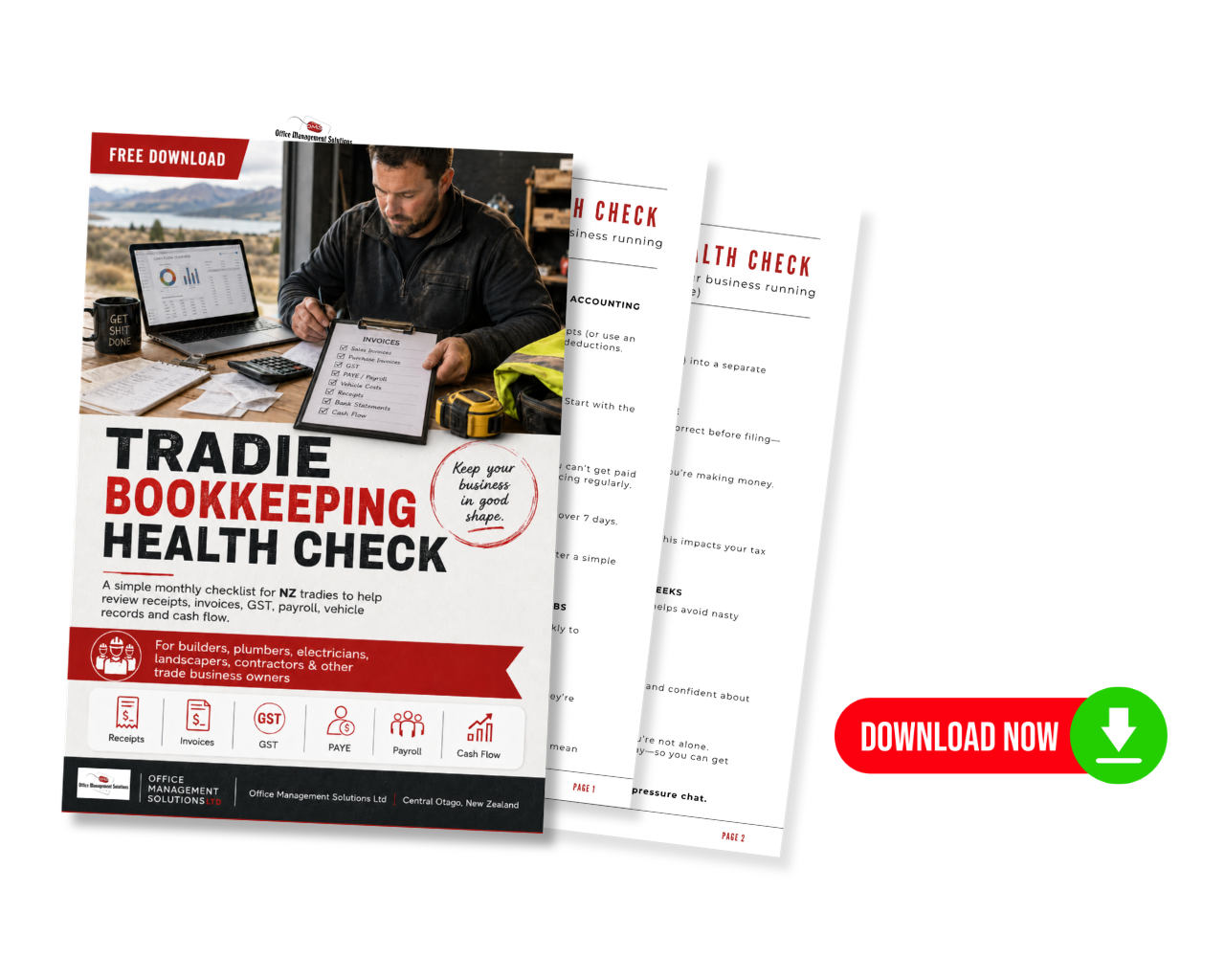
To help, we have created the free Tradie Bookkeeping Health Check, a simple checklist to help business owners keep on top of receipts, invoices, GST, payroll, vehicle records, cash flow, and job costs.
Download the free checklist or get in touch if you would like support with your bookkeeping and business admin.